Projects, tasks, and schedules describe different parts of delivery. Use them together without recording the same commitment several times.
Choose the right record
| Use | Best for |
|---|---|
| Project | A body of client work with multiple steps, files, people, or outcomes |
| Task | A specific action with an owner and expected completion |
| Calendar event | Work or a meeting that must happen at a particular time |
| Reminder | A lightweight prompt to return to an action or conversation |
Create a project from client context
Attach the project to the client so delivery, communication, documents, and billing can be understood together. Use a clear project name that distinguishes the engagement from other work for the same client.
Assign actionable tasks
Every active task should make the next action understandable. Include an owner, due date when meaningful, and enough context to complete the task without searching unrelated systems.
Schedule time-sensitive work
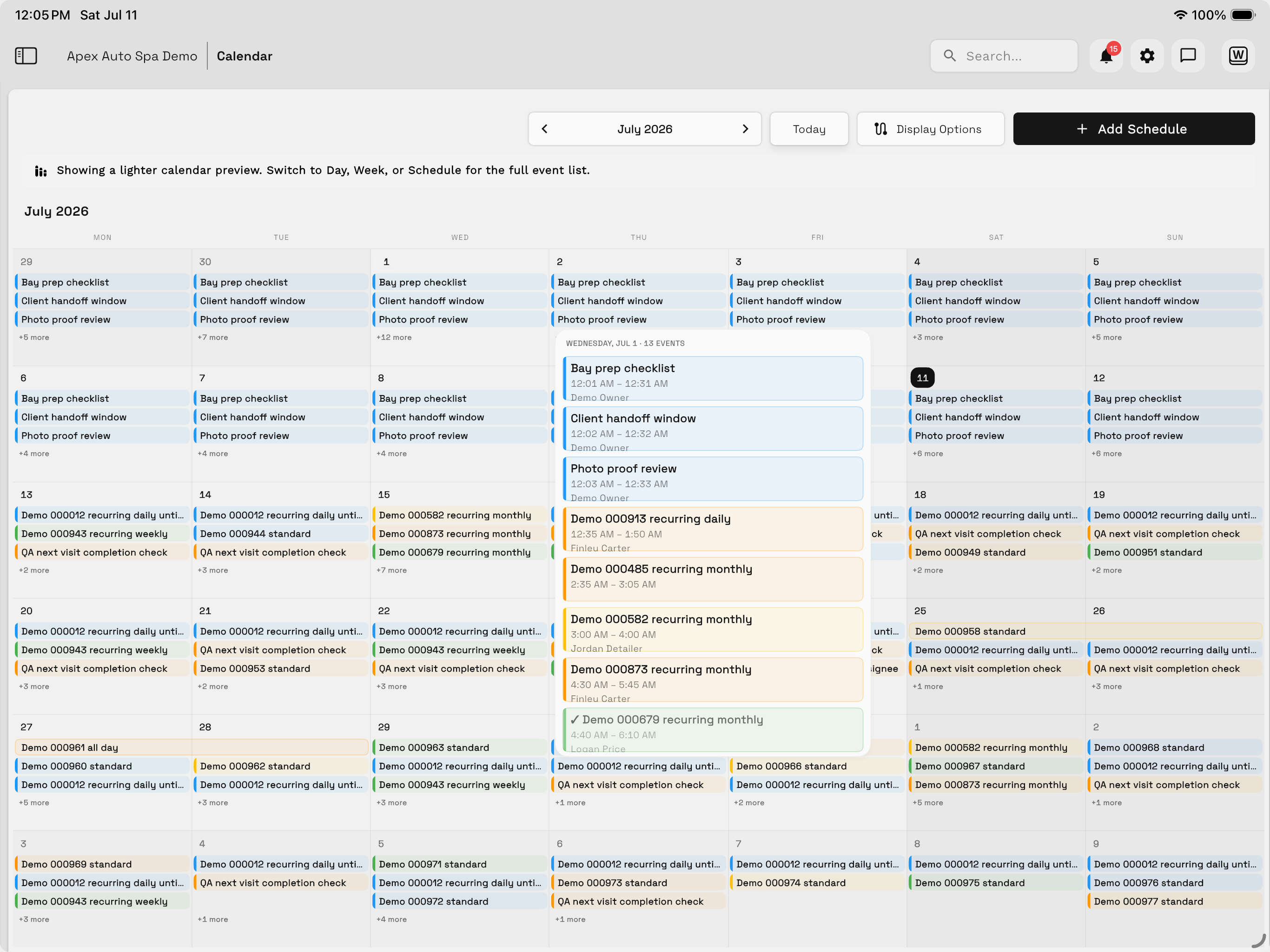
Use the calendar for meetings, visits, appointments, deadlines, and other time-bound commitments. Confirm the workspace timezone and participant details before sharing an event externally. To let clients book their own appointments from a public page or your website, see Online booking overview.
Keep the workflow current
Update task and project status as work changes. Stale status is worse than a smaller, accurate workflow because it causes the team to plan around information that is no longer true.
Connect delivery to billing
When project progress affects estimates, invoices, retainers, or payment plans, keep the billing record connected to the same client and engagement context. Continue to Invoices and payments.